
AEGIS Europe’s Position on the European Commission’s 17 December 2025 CBAM Package
AEGIS Europe supports the strengthening of the EU’s Carbon Border Adjustment Mechanism (CBAM) but argues that the Commission’s proposed Temporary Decarbonisation Fund is only a partial solution to the risk of carbon leakage for EU exporters. We call for a long-term, WTO-compatible export mechanism, stronger anti-circumvention rules, and targeted extensions of CBAM to downstream products to preserve the competitiveness of European industry.
AEGIS Europe’s Position on the European Commission’s 17 December 2025 CBAM Package
On 17 December 2025, the European Commission published a legislative package on CBAM, composed of:
1. a Proposal for a Regulation of the European Parliament and of the Council amending Regulation (EU) 2023/956 to strengthen CBAM’s effectiveness (COM(2025) 989) and;
2. a Proposal for a Regulation establishing the Temporary Decarbonization Fund (COM(2025) 990).
The Commission proposed measures aim at closing loopholes to prevent circumvention and strengthen the efficacy of EU's Carbon Border Adjustment Mechanism's (CBAM) for the CBAM definitive phase, which started on 1 January 2026.
Temporary Decarbonisation Fund (TDF) – an imperfect and insufficient interim solution for exports pending structural responses in EU ETS Review
The risk of carbon leakage related to export and the free allocation phase-out - which heightens exposure for export-oriented sectors - are acknowledged. The exposure for export-oriented sectors increases pressure as free allocation declines and CBAM costs materialise. The TDF is supposed to address the competitiveness loss in third-country markets where EU goods might be supplanted by cheaper, more emission-intensive alternatives, potentially increasing global emissions. The TDF should ensure a level playing field for EU exporters affected by CBAM.
The TDF introduces an indirect and time-limited support measure without providing any direct solution to address carbon leakage related to exports, particularly for some goods at high risk of carbon leakage and not covered by ETS. There is, however, no certainty that the Fund will provide sufficient support to address carbon leakage related to exports.
AEGIS Europe therefore recommends:
The Fund should primarily compensate EU exporters of CBAM‑covered goods in order to mitigate the risk of product reshuffling. In a second step, it should support EU downstream exporters using CBAM‑covered inputs that face a significant cost increase due to higher carbon prices of imported precursors. Compensation will have to be brought forward to 2027 and earmarking a clearly defined financial allocation for the most exposed sectors.
The TDF cannot substitute a long-term structural solution for EU export sectors impacted by CBAM. The European Commission should therefore earmark dedicated financial support within the forthcoming EU Multiannual Financial Framework, providing long‑term certainty for EU producers.
This long-term solution needs to be proposed urgently and compensate EU exporters for the increased ETS costs. The raw material cost increase CBAM will generate for importers of CBAM covered goods should also be acknowledged and compensated. Export adjustments must be part of the CBAM design to ensure that European exports do not become uncompetitive on foreign markets. This long-term solution should reflect the free allocation phase out trajectory, maintain decarbonization incentives, and be explicitly linked to export exposure. It should be included in the ETS review proposal which is expected mid-2026. AEGIS Europe proposed a WTO-compatible solution.
A close monitoring of European industry’s performance in EU and third-country markets by the European Commission is necessary to assess, over time, carbon leakage risks, including those related to exports.
Extension to downstream products
The European Commission should consider extending CBAM in a targeted manner to certain downstream sectors to ensure level playing field, as CBAM may shift competitive pressure further down the value chain.
The European Commission should complete the vertical extension to downstream products where this is justified by a high carbon leakage and circumvention profile and supported by a demonstrated technical and economic feasibility, including the availability of a robust methodology for calculating emissions in complex goods.
Extensions should be supported by clear principles and criteria, robust impact assessments across the value chain (upstream and downstream products) and thorough consultations with both directly and indirectly impacted sectors. The scope of the extension must also consider potential distortions and unintended consequences for market dynamics.
Additional anti-circumvention measures
European Commission’s proposals to address circumvention are welcome as a first step but need to be further strengthened to secure CBAM delivers on expectations.
The anti-circumvention measures largely consist of empowering the European Commission and competent authorities to act if circumvention risks are identified. Instead, a clearer political mandate from co-legislators is necessary, with more visibility on the countermeasures, notably via the application of default values.
The European Commission’s definition of “abusive practices” seems too narrow, and the risk of resource shuffling needs to be effectively addressed. The effectiveness of its proposals needs clarification in the CBAM regulation, before it is implemented in secondary legislation.
Both the European Commission and competent authorities must have sufficient resources and capacities to identify circumvention and address it through controls and concrete measures to combat circumvention of these rules are necessary.
Given that CBAM has just entered its definitive period, potential abusive practices remain open-ended and should be regularly assessed by the Commission.
In addition to circumvention practices, CBAM-related cost absorption should also be considered.
We welcome that the CBAM Registry High Level architecture is offering a portal to the user communities including OLAF. However, we are of the opinion that the European Anti-Fraud Office (OLAF) should be more assertive by strengthening its investigative mandate, improving access to real-time data, and empowering it to directly intervene in cross-border fraud cases. As the CBAM has entered its definitive phase, OLAF’s role is critical in detecting circumvention, such as misreporting origin or misclassifying goods to evade carbon costs. In a future revision of CBAM the Regulation should explicitly grant OLAF the power to launch investigations into suspected circumvention on its own initiative, reducing reliance on national authorities to initiate cases.
Transparency of the CBAM registry
Transparency is essential for ensuring market integrity, stakeholder trust, and effective enforcement. The ETS Registry has demonstrated that clear, accessible, and timely information enhances accountability, reduces the risk of fraud and market manipulation, and supports informed decision-making by industry and policymakers. Given that CBAM will play a critical role in preventing carbon leakage, similar transparency standards are necessary to reinforce the credibility of the EU’s climate policy framework and ensure that CBAM operates as a robust and trusted instrument in the transition to a low-carbon economy.
AEGIS Europe’s key messages on CBAM
· AEGIS Europe supports a CBAM that is efficient in addressing carbon leakage risks while ensuring a level playing field on both European and foreign markets
· Simplification attempts are welcome, but not at the expense of effectiveness in preventing carbon leakage. Simplification should not facilitate or lead to circumvention
· CBAM needs a WTO-compatible export solution for producers of CBAM goods to avoid carbon leakage and the replacement of EU low-carbon products with high-carbon alternatives on global markets
· Anti-circumvention rules must be strengthened to ensure the effectiveness of the measure and avoid practices such as resource shuffling or cost absorption
· CBAM alone cannot solve the carbon leakage issue for all sectors, especially ETS sectors it covers with very specific value chains, products, and global trade flows. For these sectors, a stronger carbon leakage protection and additional measures are needed
***
AEGIS Europe is an industry alliance that brings together more than 30 European manufacturing associations representative of the whole value chain, from commodities down to consumer end products. Our members account for more than €500 billion in annual turnover, as well as for millions of jobs across the EU.

AEGIS Europe urges the Commission to take action on global overcapacities and support the safeguard case on ferroalloys and silicon
Brussels, 14 October 2025 – AEGIS Europe welcomes the European Commission’s initiative to address the negative trade-related effects of global overcapacity in the steel sector, and warns that the challenge of overcapacities extends far beyond steel. This requires a solution for the steel value chain as well as for other sectors facing similar challenges.
Overcapacities have become a value-chain problem, affecting upstream and downstream industries alike – from raw materials to final goods. China alone can meet Europe’s entire industrial demand several times over in many manufacturing sectors, while other third countries are also expanding production, making overcapacity a truly global phenomenon. This systemic distortion, largely – but not exclusively - driven by state-supported production, is undermining Europe’s drive toward strategic autonomy, deterring investment, and accelerating deindustrialization.
Recent developments in the ferroalloys and silicon sector, in particular, illustrate the scale of the challenge. With existing spare capacity exceeding 21 million tonnes and planned capacity increases of more than 13 million tonnes worldwide, global overcapacity for manganese and silicon-based alloying elements has reached unprecedented levels. These volumes cannot be absorbed by the market, especially amid declining European consumption and shrinking export opportunities as third countries adopt their own trade defence measures.
This crisis has brought Europe’s ferroalloys and silicon industry to the brink of collapse. As noted by Euroalliages – the European federation representing that industry, and active member of AEGIS Europe, the last silicon-metal producer in the EU recently closed. Silicon and ferro-alloys materials are indispensable for the production of steel, aluminium, batteries, and advanced defence applications – from cars and energy storage to drones and strategic infrastructure. Without them, Europe’s industrial resilience and economic security are at risk.
AEGIS Europe therefore expresses its strong support to the imposition of measures in the framework of the safeguard case on manganese and silicon-based alloying elements. The adoption of effective safeguard measures is essential not only to preserve the future of the ferro alloys and silicon industry, but also to prevent further deindustrialization across interconnected value chains.
AEGIS Europe believes this case is an example of the urgent need to adopt a comprehensive approach to overcapacities, extending to all affected sectors. This includes:
Establishing a regular EU monitoring system of overcapacities risks by country and sector, building on the model of import surveillance;
Creating an EU instrument to counter overcapacities based on the rationale behind the new steel measures. This instrument should be applicable across all sectors, independent of the safeguard mechanism, and triggered by industry;
Enabling effective border measures, including punitive tariffs or equivalent actions, against imports originating from countries that directly or indirectly subsidize overcapacity.
As Commission President Ursula von der Leyen stated, “Global overcapacity is damaging our industry. We need to act now.” AEGIS Europe fully supports this call and urges the Commission to translate this recognition into a robust and forward-looking policy response.
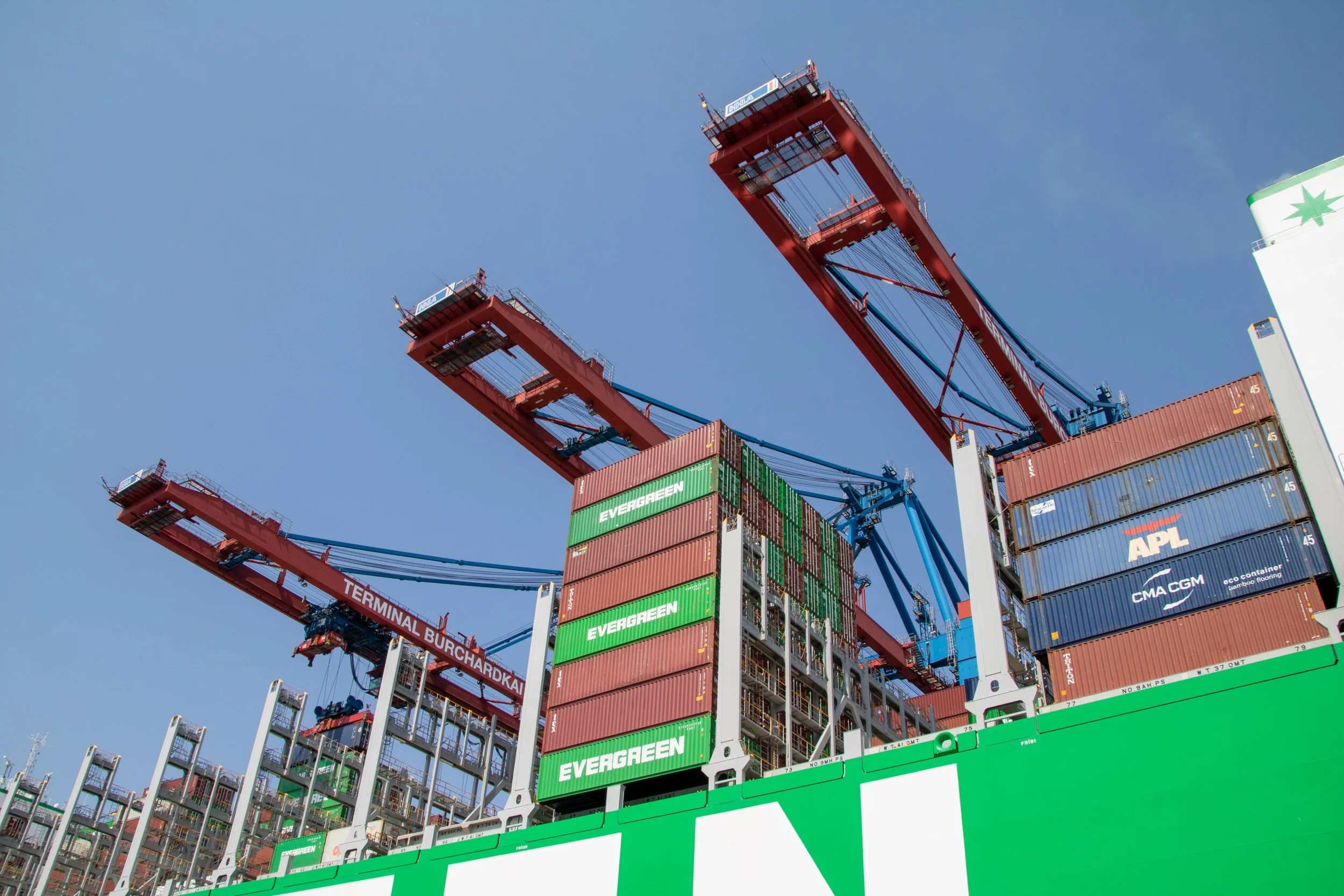
AEGIS Europe Position on the European Commission’s proposal for CBAM simplification
Brussels, 8 May 2025. On February 26th, the European Commission adopted the Omnibus package, a series of proposals to simplify EU rules and boost competitiveness in several legislative fields, among which the Carbon Border Adjustment Mechanism (CBAM). Further to that, the European Commission announced a comprehensive CBAM review for Q3 2025, assessing the feasibility of extending CBAM scope to other EU ETS sectors at risk of carbon leakage, to downstream sectors and to indirect emissions, and to evaluate support for exporters. The steel and metals action plan (March 19) announced that a communication on options for an export adjustment might already be published by the EC in Q2 2025. Another interesting announcement concerns the release of an anti-circumvention strategy in Q4 2025 together with the legislative proposal on the extension of the scope of CBAM.
We welcome the European Commission’s commitment to simplify the CBAM to foster fair trade. While simplification is essential and a step in the right direction, allowing to significantly reduce the administrative burden for declarants – especially SMEs, AEGIS Europe members agree on the ultimate importance of finding a balance between simplification, accuracy and effectiveness of the mechanism in preventing carbon leakage. Moreover, simplification should not facilitate or lead to circumvention, and any effort in this sense should be subject to a comprehensive evaluation. A thorough consultation of the industry, including both CBAM sectors and sectors which might be covered by CBAM, should be conducted.
AEGIS Europe would like to express its position on some of the key proposals outlined in the Omnibus package on CBAM simplification:
Exemption threshold for small importers at 50 tonnes of CBAM goods per year. This proposal would allow to exempt around 90% of importers from CBAM obligations, while keeping 99% of embedded emissions in the scope, thus reducing administrative burden and maintaining the environmental objective of CBAM. However, as noted above, effective enforcement, for example through establishing robust and comprehensive risk assessment mechanisms, is necessary to prevent circumvention, as economic operators could try and avoid CBAM obligations by artificially importing through multiple entities as subsidiaries, falling below the threshold, or by splitting EORI numbers. Furthermore, the same logic of simplification applied here to importers under the CBAM should apply to EU producing small emitters under the EU ETS (Art. 27 of the ETS Directive) by increasing from 25Kt to 50KtCO2/year the threshold below which EU producers can opt out and be subject to national equivalent measures, thereby decreasing the administrative burden without lowering the decarbonisation ambition and efforts of EU producers.
Simplification for EU precursors is also welcomed. As AEGIS Europe stated on other occasions, it is important to avoid double reporting for EU ETS installations in order to reduce the administrative burden. However, for legal coherence, the sentiment expressed in Recital (14)1 which creates a derogation for reporting EU-produced precursors should be materialised in an Article. The European Commission should update its existing guidance document to avoid double reporting already during the transitional period.
Amendment of art. 26 of the CBAM regulation with the inclusion of a paragraph 1(a) stating that competent authorities can, under certain conditions, decrease the amount of the penalty imposed for the failure to surrender a given number of CBAM certificates. AEGIS Europe believes that the proposal creates an uneven playing field and legal uncertainty and inconsistencies across Member States, as the derogation is not predicted under EU ETS. This could open the door for non compliance and failing to follow the conditions set out in art. 16(1) of the EU ETS directive, stating that penalties should be “effective, proportionate and dissuasive”. Finally, CBAM penalties should always be equivalent to ETS penalties.
Entry into force of CBAM financial obligations in 2027. The kicking in of financial obligations should be maintained in 2026, as its delay undermines the effectiveness of the tool because goods enter the EU market in 2026 without any certainty that declarants will be able to fulfil the surrendering obligation in late 2027.
Default values for countries where there is not enough available data. The Commission’s proposal suggests using an average of the ten high emitting countries to calculate default values for countries where there is not enough reliable data. Using such a wide sample could result in default values lower than the actual emissions of the country, thus failing to encourage reporting of actual emissions. We recommend the use of a smaller sample, such as the top three-highest emission exporting countries where there is enough reliable data.
Overall, the Omnibus proposal seems to go in the right direction, although there are still further steps that can be taken to strengthen CBAM effectiveness and prevent circumvention while simplifying the system:
Foreign operators should be able and strongly encouraged to provide their emission data directly through a submission in the CBAM registry. This would enhance the quality of the data as the same operators would be subject to a third-party verifier scrutiny and to the verification of the EU CBAM Authorities. If this cannot be guaranteed, CBAM declarants should use default values. This would allow the simplification of the reporting system of emission data by CBAM declarants, as they would be able to refer to the submissions made by the foreign installation and tie it to the specific imports they have made.
The same level of transparency of the ETS should apply to CBAM: the information in the CBAM Registry will be confidential, while the EU ETS Registry Regulation provides public access to most of the relevant information included in the registry.
Background
AEGIS Europe supports a CBAM that is efficient in addressing carbon leakage risks while ensuring a level playing field for European and foreign producers. To achieve these goals, we believe it is imperative to assess CBAM effectiveness before any extension of its scope to other goods: this assessment should have as a departing point a consultation of the industry. To do so, it is important to define the assessment criteria which will be used and to conduct a prior, thorough impact assessment by consulting the industries concerned. Moreover, for some ETS sectors with very specific value chains, products, and global trade flows, a CBAM cannot effectively address carbon leakage and reduce emissions. For these sectors a stronger carbon leakage protection is needed.
Secondly, anti-circumvention rules must be strengthened to ensure the effectiveness of the measure and avoid practices such as resource shuffling which allows the exporting third country producers to only export to the EU products with lower carbon footprint while deviating more carbon-intensive products to other markets, or cost absorption, where producers could absorb partially or totally the cost of the CBAM by reducing the price of the products at the EU border and/or by spreading the levy across his entire production. The risk of circumvention must be monitored at customs level, and the authorisation process for CBAM declarants should ensure that they are sufficiently skilled to detect this. Effective enforcement of the new proposed exemption threshold for small importers at 50 tonnes of CBAM goods per year as introduced by the Omnibus package is necessary to prevent circumvention, as economic operators could try to avoid CBAM obligations by artificially importing through multiple entities falling below the threshold.
Finally, AEGIS Europe has been advocating for the adoption of an export adjustment for several years: CBAM needs a WTO-compatible export solution for CBAM sectors to avoid carbon leakage and the replacement of EU low-carbon products with high-carbon alternatives on global markets. European producers already face several challenges in export market, including high production costs (especially energy costs), global overcapacities, and aggressive industrial and trade policies by third-country competitors. An ERCST report stressed that failing to adequately address export issue could lead to a diminished competitiveness, suboptimal capacity utilization, reduced profitability, and eventual plant closures, further exacerbating the financial pressure within the sectors concerned and impacting substantial investment decisions in the near future. We are pleased to see that the need to support EU exporters is gaining increasing prominence in the European Commission’s legislative agenda and industrial discussions, and we eagerly wait for the presentation of the EC’s proposals to solve the exports loophole in CBAM coming in Q2 2025.
***
AEGIS Europe is an industry alliance that brings together more than 30 European manufacturing associations representative of the whole value chain, from commodities down to consumer end products. Our Members account for more than €500 billion in annual turnover, as well as for millions of jobs across the EU.
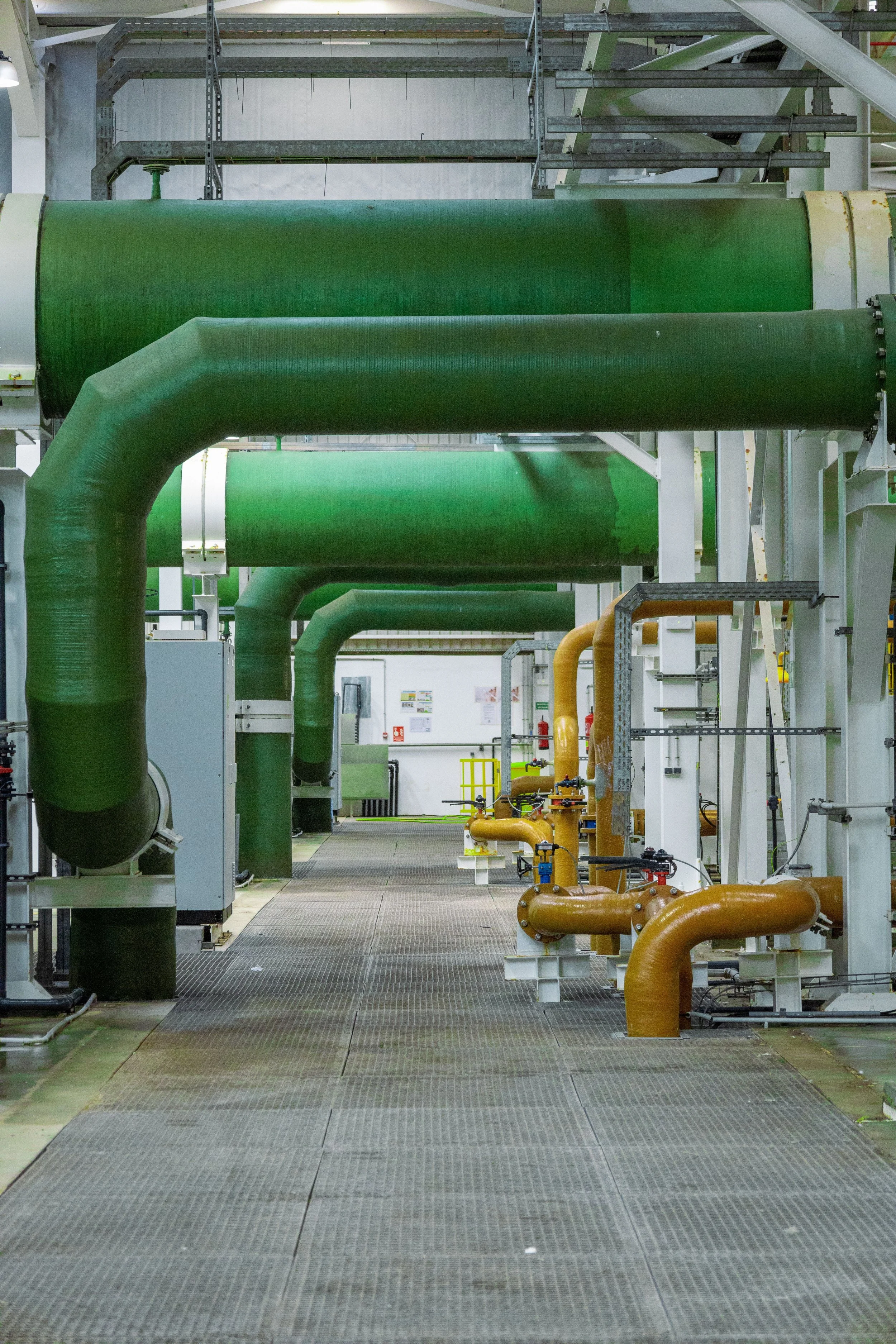
AEGIS Europe reacts on the ERCST Report “Solutions for exports of EU CBAM-covered goods”
AEGIS Europe reacts on the ERCST Report “Solutions for exports of EU CBAM-covered goods”and asks for an effective export solution, strengthened anti-circumvention measures and thorough industry consultation
Bruxelles, 8 May 2025. AEGIS Europe welcomes the recent publication of the ERCST Report “Solutions for exports of EU CBAM-covered goods” on March 25th. The report provides an in-depth analysis of the main proposals to address exports related carbon leakage that were advanced over the years, and we are glad that AEGIS Europe’s legal study for a WTO-compatible export adjustment has been included in the analysis.
AEGIS Europe has been advocating for the adoption of an export adjustment for several years: CBAM needs a WTO-compatible export solution for CBAM sectors to avoid carbon leakage and the replacement of EU low-carbon products with high-carbon alternatives on global markets, in a context where European producers already face several challenges in the export market, including high production costs (especially energy costs), global overcapacities, and aggressive industrial and trade policies by third-country competitors.
Furthermore, anti-circumvention rules must be strengthened to ensure the effectiveness of the measure and avoid practices such as resource shuffling which allows the exporting to the EU only products with lower carbon footprint while deviating other products to other markets, or cost absorption, where producers could absorb partially or totally the cost of the CBAM by reducing the price of the products at the EU border and/or by spreading the levy across his entire production. The risk of circumvention must be monitored at customs level, and the authorisation process for CBAM declarants should ensure that they are sufficiently skilled to detect this. Effective enforcement of the new exemption threshold for small importers at 50 tonnes of CBAM goods per year as introduced by the Omnibus package is necessary to prevent circumvention, as economic operators could try and avoid CBAM obligations by artificially importing through multiple entities falling below the threshold.
AEGIS Europe supports a CBAM that is efficient in addressing carbon leakage risks while ensuring a level playing field on both European and foreign. To achieve these goals, we believe it is imperative to assess CBAM effectiveness before any extension of its scope to downstream products: this assessment should have as a departing point a consultation of the industry. To do so, it is important to define the assessment criteria which will be used and to conduct a prior thorough impact assessment by consulting the industries concerned. Moreover, for some ETS sectors with very specific value chains, products, and global trade flows, a CBAM cannot effectively address carbon leakage and reduce emissions. For these sectors a stronger carbon leakage protection is needed.
Finally, AEGIS Europe members agree on the ultimate importance of finding a balance between simplification, accuracy and effectiveness of the mechanism in preventing carbon leakage. Moreover, simplification should not facilitate or lead to circumvention, and any effort in this sense should be subject to a comprehensive evaluation. A thorough consultation of the industry, including both CBAM sectors and sectors which might be covered by CBAM, should be conducted, keeping in mind that CBAM alone cannot solve the carbon leakage issue for all sectors, and further measures are needed to achieve decarbonisation.
AEGIS Europe is an industry alliance that brings together more than 25 European manufacturing associations representative of the whole value chain, from commodities down to consumer end products. Our Members account for more than €500 billion in annual turnover, as well as for millions of jobs across the EU.